Updated November 2026 · Colorado Revised Statutes 6-22, Denver Contractor Licensing, NOAA storm records and our directory of 51 Denver gutter companies
Gutter Damage, Insurance and Contractor Licenses in Denver: What Homeowners Should Know
After every big hailstorm, Denver fills up with door-knockers. NOAA recorded 246 hail reports inside the city from 1950 to 2019, 170 of them one inch or larger, which is enough to dent aluminum gutters. Here is how insurance treats gutter damage, what Colorado law says, and how to check a gutter company before you hire it.
What home insurance usually covers
| Cause | Usually covered? | Why |
|---|---|---|
| Hail dents, crushed downspouts | Often yes | Sudden storm damage to the house; your deductible applies. |
| Wind tearing gutters off | Often yes | Sudden damage; many Colorado policies use a separate wind and hail deductible. |
| Fallen tree or limb | Often yes | Sudden damage to the dwelling. |
| Ice-dam water damage inside | Depends | Interior water damage may be covered; the ice dam itself and gutter wear often are not. |
| Clogged, rusted or sagging gutters | Usually no | Wear and lack of maintenance are standard exclusions. |
This is general information, not advice on your policy. Read your declarations page for the deductible and exclusions, or call your agent.
Filing a hail claim for gutters: five steps
- Write down the storm date. Hail reports by date are public in NOAA's storm database.
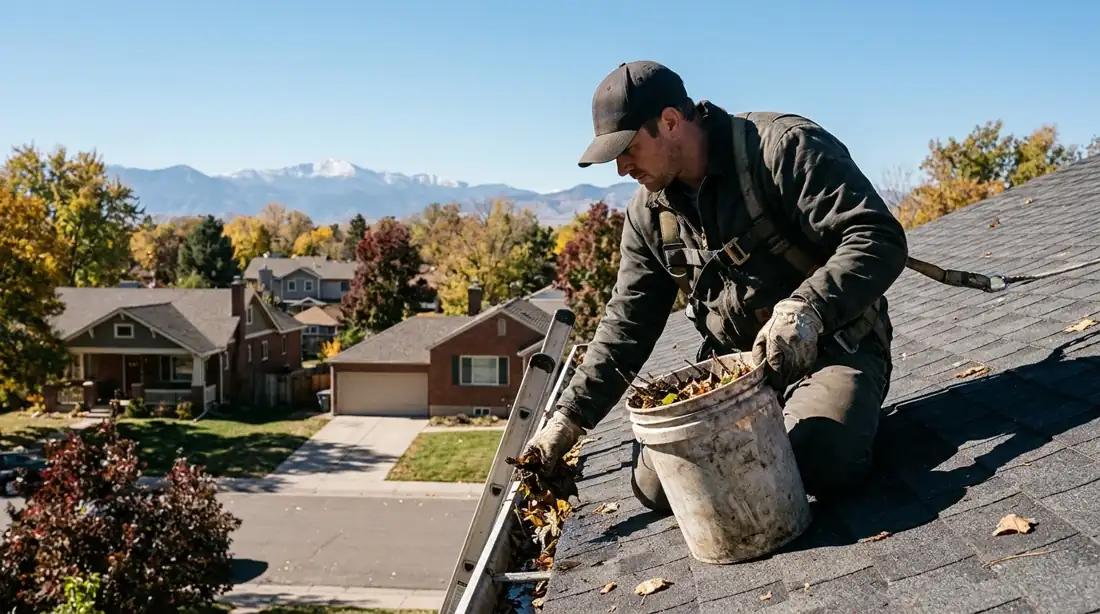
- Photograph every dent, crushed downspout and loose section, plus dents on cars, fences or air-conditioner fins, which show the hail size.
- Look inside the gutters for shingle granules and photograph them: they point to roof damage too.
- Call your insurer before signing with any contractor. Get the adjuster's inspection first.
- Get a written estimate. Under Colorado law a residential roofing contract must be written and list the work, cost and dates.
What Colorado law says about roofing and storm contracts
- No deductible tricks. A roofing contractor may not pay, waive or rebate your insurance deductible, or advertise that it will (C.R.S. 6-22-105).
- 72 hours to cancel. You can cancel a residential roofing contract within 72 hours of signing, with your deposit returned within ten days (C.R.S. 6-22-104).
- Denied claim, free exit. If the work was to be paid by insurance, you can also cancel within 72 hours of your insurer's written denial.
- Written contract. Required for residential roofing work over $1,000, with scope, cost, dates and the contractor's contact details.
These rules cover residential roofing work. When gutters are replaced as part of a hail roof job, they normally fall under the same contract.
Licenses in Denver
Denver licenses contractors through its Community Planning and Development department, in two steps: a supervisor certificate, then a contractor license. Denver does not accept licenses from other counties or states, so a company licensed in Aurora or Lakewood is not automatically licensed in Denver. Routine gutter cleaning is maintenance, but gutter replacement and roofing are construction work: ask for the Denver license number and check it with the city before work starts.
How to check a gutter company: what our directory shows
We reviewed the Google profiles of 51 companies that offer gutter cleaning in and around Denver. Only 28 show a street address, 41 have a website, 29 show how many years they have been in business, and 15 offer online estimates. Before you hire:
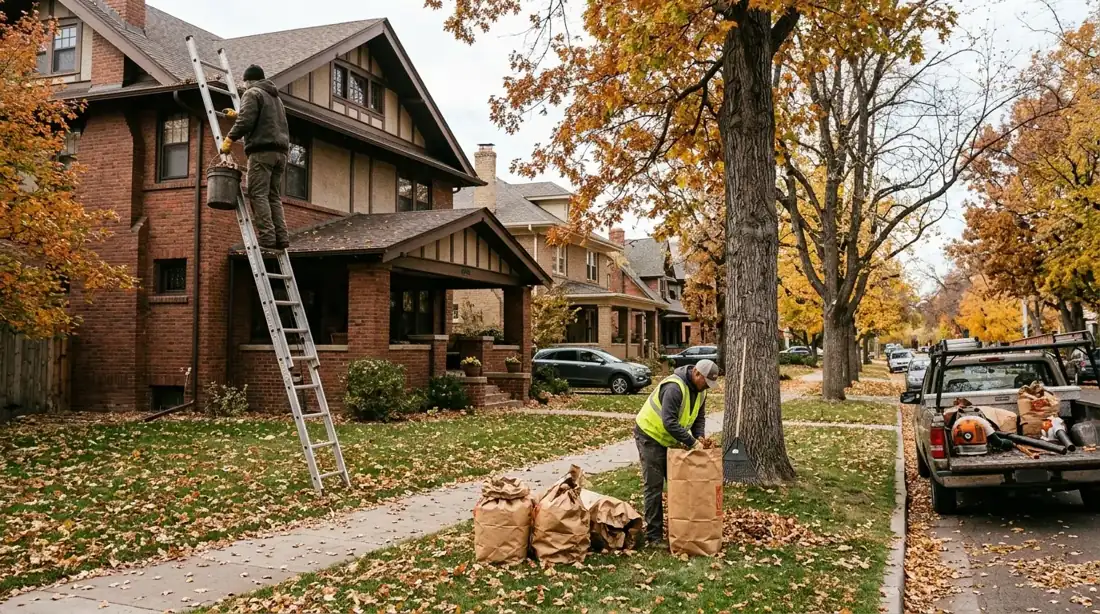
- Ask for a certificate of liability insurance, and workers' compensation if they send a crew. A fall from a ladder is the main risk of the job.
- Ask for the Denver license number if the job includes repairs, new gutters or roofing.
- Get the price in writing: flat or per linear foot, number of stories, downspouts included, haul-away included.
- Ask for before and after photos of every side of the house.
- Be wary of anyone who knocks after a storm, asks for full payment upfront or offers to cover your deductible.
What a proper gutter cleaning includes
- All debris removed from every gutter run, bagged and hauled away (not dumped on the lawn).
- Every downspout flushed with water and cleared if blocked.
- A check of hangers, seams, end caps and slope, with problems pointed out.
- Roof valleys near the gutters cleared of loose debris.
- Before and after photos.
Frequently asked questions
Does homeowners insurance cover gutter damage in Denver?
Usually only when the damage is sudden, such as hail, wind or a falling tree, and the gutters are covered as part of the house. Damage from clogs, rust or lack of maintenance is normally excluded. Check your own policy and deductible, since many Colorado policies carry separate or higher wind and hail deductibles.
Can a contractor pay my insurance deductible in Colorado?
No. Colorado law (C.R.S. 6-22-105) bars roofing contractors from paying, waiving or rebating a homeowner's insurance deductible, or promising to. An offer to "cover your deductible" after a hailstorm is a red flag.
Can I cancel a roofing or gutter contract after a hailstorm?
Under Colorado's residential roofing law, you can cancel within 72 hours of signing and get your deposit back, and also within 72 hours of your insurer telling you in writing that the claim was denied. This applies when gutter work is part of a residential roofing job.
Do gutter cleaners need a license in Denver?
Denver licenses contractors through Community Planning and Development and does not accept licenses from other cities or states. Routine gutter cleaning is maintenance, but repairs or replacement tied to roofing are construction work. Ask for the company's Denver license number and proof of liability insurance before anyone climbs your roof.
What should a gutter cleaning include?
Removing debris from every gutter by hand or with a tool, bagging it and hauling it away, flushing and testing every downspout, a check of hangers and seams, and photos before and after. Ask whether roof debris and downspout unclogging are included or extra.
← Back to Gutter Cleaning Denver CO